Request A Quote
 Contact Us
 India (Select Country)

 Australia
 UK
 USA
 South Africa
 Malaysia
 German
 UAE




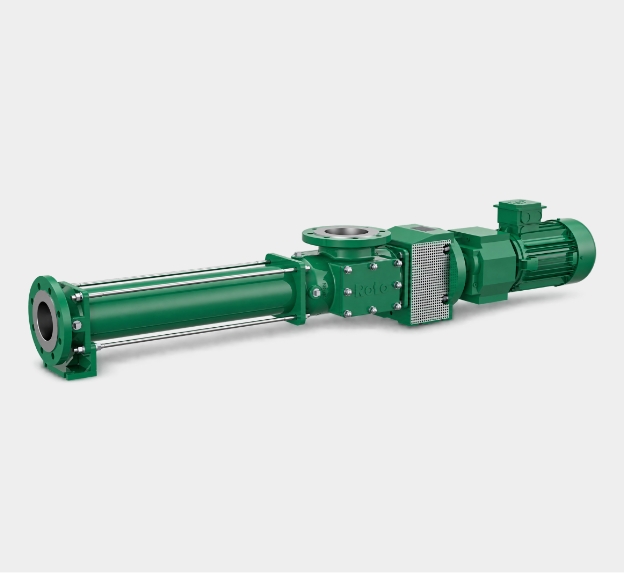
Progressive Cavity Pumps
Robust & Compact footprint pumping range for Industrial Applications with Precision and Reliability
Flow Rate -
Up to 550 m3/hr / 2420 GPM
Pressure -
Up to 120 Bar / 1740 PSI

What Is a Progressive Cavity Pump?
Powerful Pumping, Pulse-Free Performance
A progressive cavity pump is a type of positive displacement pump that transfers fluid using a single helical rotor inside a double-helix elastomer stator, forming sealed cavities that move fluid smoothly with low pulsation and constant flow.
A progressive cavity pump (also called single screw pump or eccentric screw pump) is designed to handle fluids that vary from low to high viscosity while maintaining steady, non-pulsating flow.
It is widely used for difficult media such as slurries, pastes, sludge, chemicals, and food products.
Progressive cavity pumps are classified as positive displacement pumps, meaning flow is proportional to speed and largely independent of pressure. They are available in multiple configurations such as:
- Horizontal and vertical progressive cavity pumps
- Wide throat pumps( hopper pumps) for highly viscous liquids
- MIP Maintenance in place pumps
- API 676 4th edition progressive cavity pumps for critical/hazardous applications

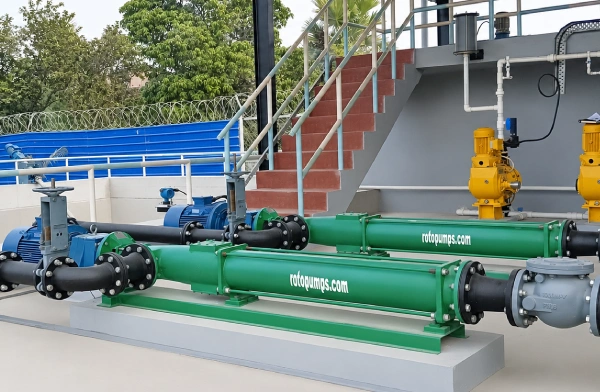

From mild to aggressive applications, we’ve got you covered
Our pumps are engineered to handle an extensive range of media, making them ideal for complex and demanding applications.
Our pumps efficiently transfer fluids with the following characteristics
- From low-viscosity liquids to highly viscous liquids containing solids up to 150 mm (6 in)
- Wide viscosity range: 1 cSt to 3 million cSt
- Thixotropic and dilatant liquids
- Shear-sensitive and shear-stable materials
- Abrasive and solid-laden slurries
- Non-lubricating as well as lubricating fluids
- Aggressive chemicals
- Sticky adhesive media
- Toxic and hazardous fluid


How a Progressive Cavity Pump Works
Progressive Cavity Pump – Working Principle
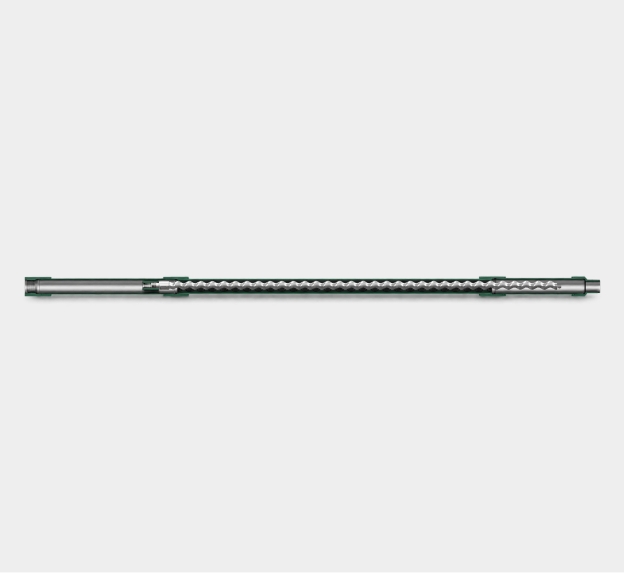
A Progressive Cavity Pump is a rotary positive displacement pump designed to transfer fluids in a steady and controlled manner. It operates using two main internal elements: a single-helix rotating rotor and a double-helix stationary stator. Together, these components form a sequence of sealed cavities that move fluid continuously from the suction side to the discharge end.
As the rotor turns inside the stator, these cavities progress forward in a smooth, linear motion. This mechanism allows the pump to maintain strong suction capability and stable discharge pressure, even when handling difficult media. The close-fitting geometry between the rotor and stator creates a tight seal, enabling excellent priming performance and reliable pressure retention.
Because the fluid moves in enclosed chambers rather than being agitated, the flow remains uniform with very low pulsation. This makes Progressive Cavity Pumps ideal for applications involving high-viscosity fluids, slurries, and media containing solids. They are especially effective where shear-sensitive or abrasive materials must be transferred without altering their structure or composition.
With a self-priming, valve-free design, Progressive Cavity Pumps deliver dependable performance across industries such as wastewater treatment, food processing, oil & gas, chemicals, and bio-energy where precise, gentle, and continuous pumping is essential.
This working principle makes the pump suitable for high-pressure applications and for fluids that are shear-sensitive or abrasive.
Exploded Pump View
Optimized Rotor & Stator Geometry
Available in both standard and 6L geometry options
- An elastomer seal ring at both ends of the stator is an integral part of the stator is an integral part of the stator preventing corrosion of stator tube as the pumped media doesn’t come in contact with the stator sleeve or the adhesive.
- Stators are designed with a tapered entry to facilitate easier entry of media and improve the suction capability.
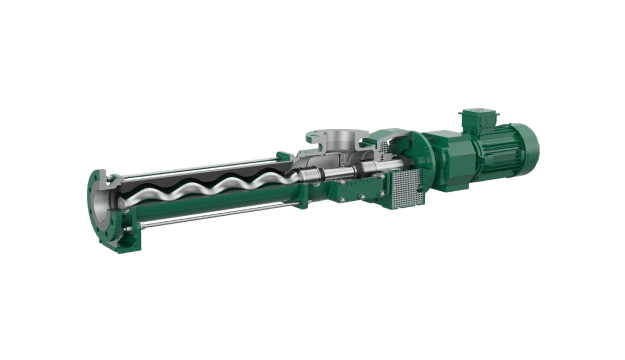
Improved Pump Housing
Two large inspection ports enable easy & quick inspection of the joints and removal of any blockage during pumping.
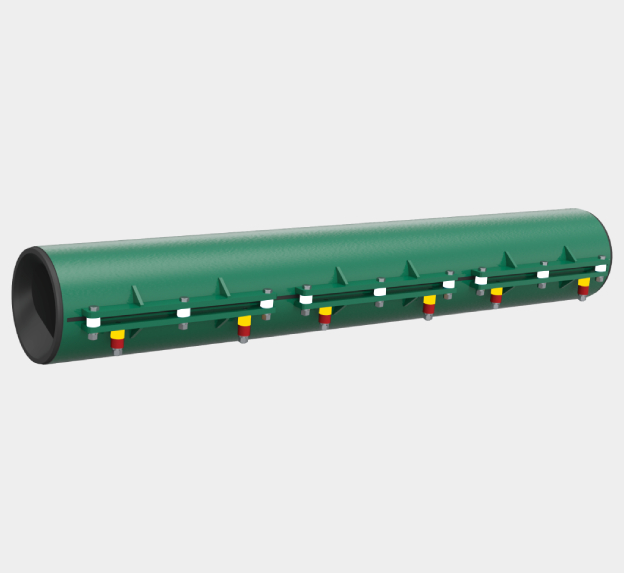
Wear Compensation Stator
Roto’s unique Wear Compensation Stator design allows it to control and regulate the efficiency of Progressive Cavity Pumps for an extended period. It uses spacers (White, Yellow and Red colors) of engineered lengths to maintain even interference throughout the length of rotor and stator.
Advanced Shaft Seal Design
The open seal housing design prevents media accumulation, enhancing seal life and eliminating the need for seal flushing plans.
Heavy Duty Bearing Housing
Bearing Housing Designed with a two-piece shaft, it supports all types of drives and simplifies servicing of rotating parts.
Choose Your Pump
Progressive Cavity Pumps are available in 2 options
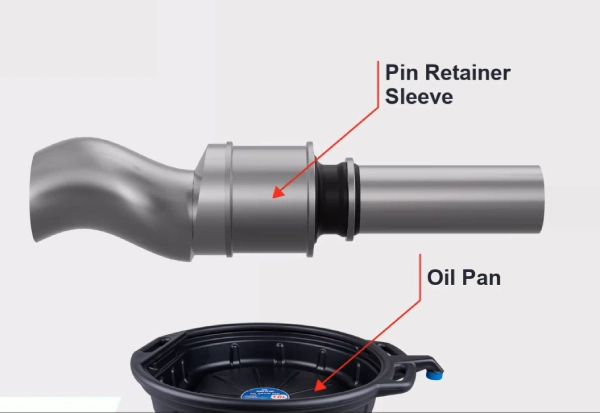
Thrust Bush Joint
The uniquely designed thrust bush joint efficiently absorbs axial loads, ensuring smooth and reliable operation. A metal-reinforced boot seal prevents media from entering the joints, extending joint life and reducing wear and maintenance.

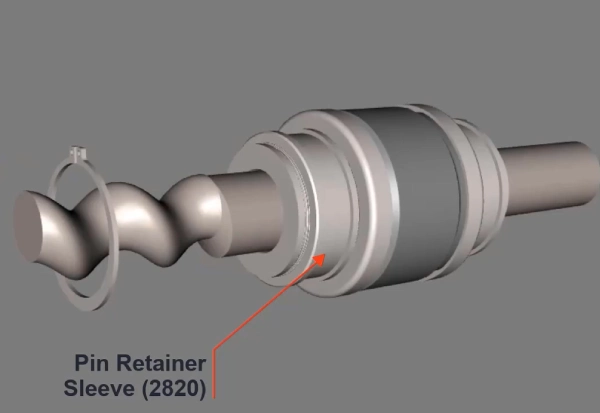
Universal Cardan Joints
The Cardan type universal joint used in this pump is acknowledged to be far superior to the conventional gear joint, or single pin & bush joint which is subjected to extreme concentrated loads, resulting in high wear rates
- The Cardan type of UJ joint employs two sets of perpendicular pins, each providing freedom of angular movement, which facilitates smoother transmission of angular loads
- The Cardan type UJ joint is also designed to withstand high axial forces which are dominant in Progressive Cavity Pumps
Key Advantages
- Handles a wide range of fluid viscosities
- Smooth, non-pulsating flow
- High suction lift capability
- Suitable for abrasive and shear-sensitive fluids
- Flow rate proportional to speed
- Capable of high discharge pressure
- Reversible operation possible
- Wider conformity to API 676, 4th Rotary PD Pump edition.
Reliability Benefits
- Low internal velocity reduces wear
- Uniform load distribution
- Stable flow prevents pressure shock
- Suitable for continuous operation
Maintenance Advantages
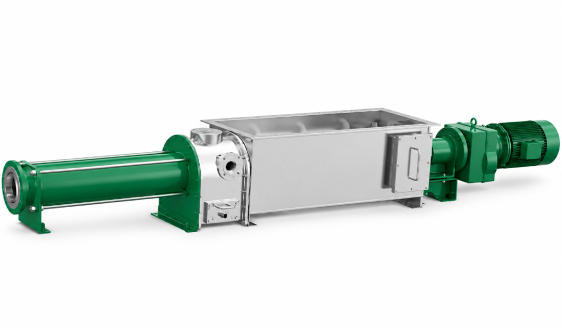
- Maintenance in place pumps allow stator replacement without dismantling the suction and delivery pipelines.
- Simple mechanical seal arrangement
- Predictable wear pattern
- Reduced unplanned downtime
Roto Progressive Cavity Pump Range




Pump Selection Guide
What to Consider Before Buying Roto Progressive Cavity Pump
Fluid Properties
- Viscosity (low to high)
- Solids content and particle size
- Abrasiveness
- Chemical compatibility
Flow Rate and Pressure
- Required capacity (m³/h or LPM)
- Maximum discharge pressure
- Continuous or intermittent duty
Installation Type
- Horizontal or vertical mounting
- Flooded suction or lift condition
- Space constraints
Compliance Requirements
- Contrary to popular belief
- There are many variations
Maintenance Strategy
- Contrary to popular belief
- There are many variations
Pump Configuration
- Standard or wide throat pump
- Single screw pump or multi-stage version
Dry Running Protection Device:
To prevent the stator damage due to dry running, specially developed temperature sensor is screwed into the stator wall to monitor the operating temperature. If by any chance the pump runs dry, the stator temperature would increase. Roto DRP would switch off the pump at pre set temperature.

Pressure Switch:
To prevent the pump from damage due to over pressurization in the discharge as well as low pressures beyond the capability of the pump. This system trips the pump and protects the pump as well as the system.

Gauges (Pressure, Vacuum, and Differential):
These devices are especially important for the system with dynamic working characteristics, that require constant monitoring. The selection of gauge requires consideration of process, environment, accuracy, dial size, connection & mounting. It is advised to limit the normal working pressure to 25-75% of the scale of the gauge.

Relief Valves:
In addition to relieving excess pressure from closed-top vessels or piping systems, these normally closed valves provide system control benefits. It is versatile and widely utilized valve. Its compact size, ease of setting, readjustment and repeatability, all contribute to its popularity. The pressure setting is done manually.

Soft Gland Packings:
Aramid packing impregnated with PTFE high temperature resisting lubricants
- Lubricated PTFE Yarn Packing
- Graphite-Impregnated Glass Yarn Packing Lubricated with Mineral Oil
- Lantern Ring (Optional)
Mechanical Seal:
- Single Coil Elastomer Bellow Seals
- Single Coil Unbalanced Seals (Unidirectional/Bidirectional)
- Lug-Driven Seals
- Balanced Seals
- Double Seals
- Flushing/Quenching as per API Plan (Optional)
Ciosed Coupled Standard Geometry

Bare Shaft Standard Geometry

Small Capacity ‘RD’ Series Pumps (Standard Geometry)
| Size | D41 | D43 | D45 | D47 | D49 | D51 | D53 | D55 |
|---|---|---|---|---|---|---|---|---|
| Capacity | ||||||||
| m 3/hr | 0.11 | 0.3 | 0.6 | 1.6 | 3.5 | 6.5 | 9.5 | 17 |
| GPM | 0.4 | 1.3 | 2.6 | 7 | 15 | 29 | 42 | 75 |
| Pressure | ||||||||
| Bar | 24 | 48 | 24 | 24 | 24 | 12 | 12 | 6 |
| PSI | 348 | 696 | 348 | 348 | 348 | 174 | 174 | 87 |
Medium to Large Capacity ‘RM’ series Pumps (Standard Geometry)
| Size | D41 | D43 | D45 | D47 | D49 | D51 | D53 | D55 |
|---|---|---|---|---|---|---|---|---|
| Capacity | ||||||||
| m 3/hr | 0.11 | 0.3 | 0.6 | 1.6 | 3.5 | 6.5 | 9.5 | 17 |
| GPM | 0.4 | 1.3 | 2.6 | 7 | 15 | 29 | 42 | 75 |
| Pressure | ||||||||
| Bar | 24 | 48 | 24 | 24 | 24 | 12 | 12 | 6 |
| PSI | 348 | 696 | 348 | 348 | 348 | 174 | 174 | 87 |
Closed Coupled Extended Geometry

Bare Shaft Extended Geometry

- Rotor - Alloy Steel, Tool Steel (Unplated), SS316 / SS 304 (Hard Chrome Plated / Unplated).
- Stator - Natural, Nitrile, High Nitrile, Chloro-sulphonated Rubber, Ethylene Propylene Diene Monomer & various advanced Fluoroelastomer grades.
- Shaft - Alloy Steel, SS 316 / SS304 (Hard Chrome Plated / Unplated).
- Coupling Rod - Alloy Steel, SS 316, SS 304.
- Pump Housing - Cast Iron, Stainless Steel.
- Shaft Sealing - Soft Gland Packing with Gland flush, Single/double mechanical seals with various flushing and quenching plans.
- Special Materials - Options available for exotic materials including Duplex, Super Duplex, Alloy 20, Hastelloy, etc.